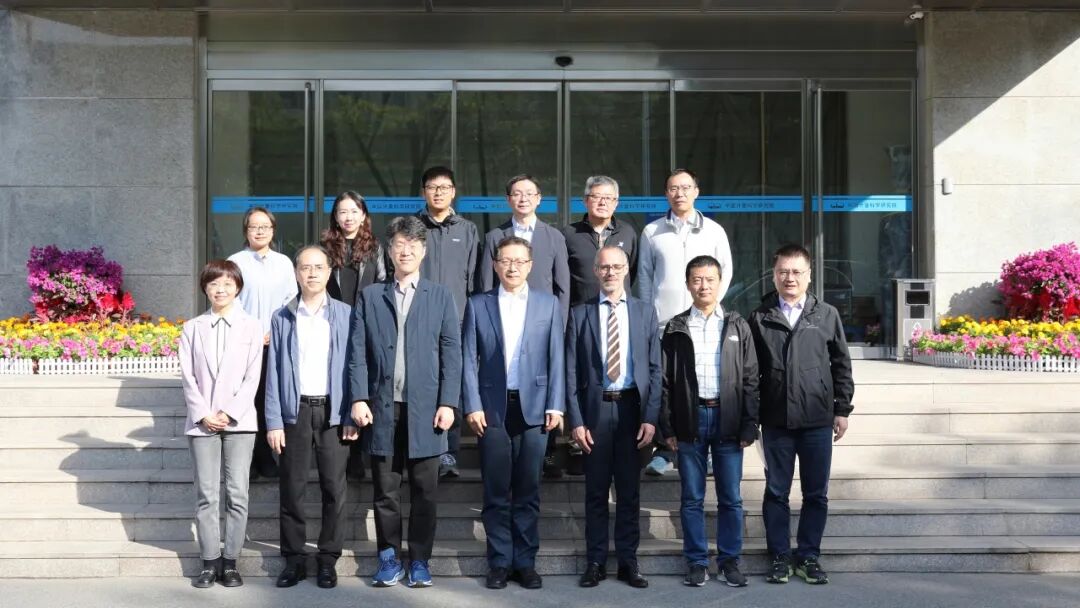
Beijing, October 15 — From October 13 to 15, the National Institute of Metrology, China (NIM) successfully completed the second round of its 2025 international peer on-site assessment. Commissioned by the China National Accreditation Service for Conformity Assessment (CNAS), the assessment team was led by a CNAS-appointed expert and included three peer experts from the Bureau International des Poids et Mesures (BIPM) and the Korea Research Institute of Standards and Science (KRISS). The review focused on NIM’s national Calibration and Measurement Capabilities (CMCs) in the field of ionizing radiation. Yang Ping, Vice President of NIM, attended the opening session and delivered remarks.
Over the three-day assessment, the expert team conducted a comprehensive and systematic evaluation of NIM’s quality management system and 238 CMC entries across three subfields—radioactivity, dosimetry, and neutron measurements. The review combined document examination, experimental record verification, and interviews with technical personnel. The assessors highly commended NIM’s effective quality management and its sustained high-level technical competence in ionizing radiation. With this assessment, NIM has successfully concluded both international peer on-site assessments scheduled for 2025.
CMCs, published in the BIPM Key Comparison Database (KCDB), represent the highest calibration and measurement capabilities of national metrology institutes and are regarded as the “technical language” of international metrology recognition. They play a critical role in supporting technological innovation and cross-border technical exchange.
In recent years, NIM has focused on priority domains, continuously strengthening and translating scientific capabilities across its disciplines while steadily establishing CMCs in critical and urgently needed areas. NIM has also played an active role within the Asia Pacific Metrology Programme (APMP) and the Euro-Asian Cooperation of National Metrological Institutions (COOMET), providing traceability services and calibration certificates to national metrology institutes in countries such as Belarus and Pakistan. These efforts have supported traceability in key sectors and enhanced the overall international impact of China's metrology.